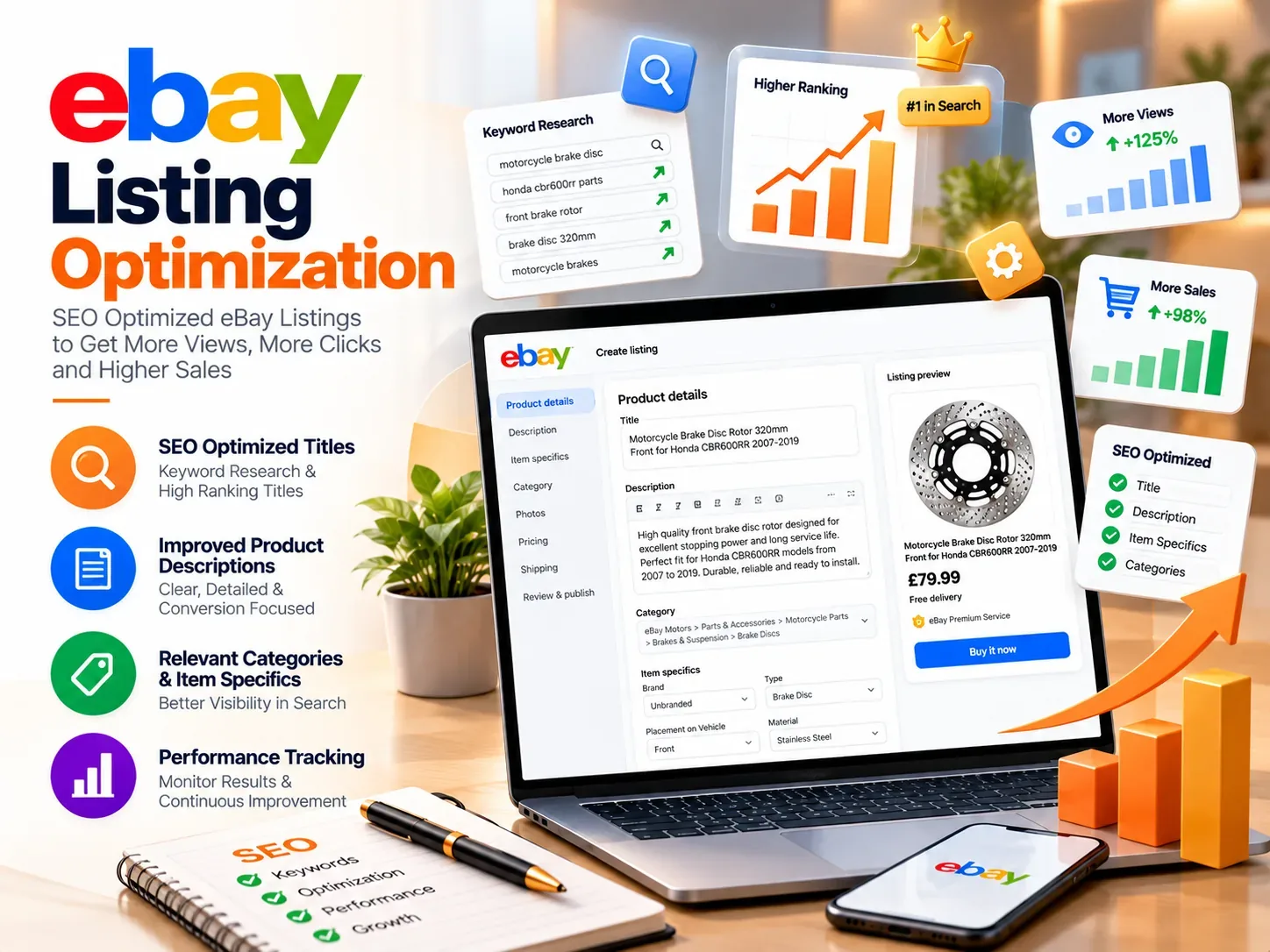
eBay SEO determines whether your products appear in search results or get lost among millions of listings. With eBay processing over 1.7 billion live listings globally, optimizing for Cassini (eBay's search algorithm) is critical for seller success.
This comprehensive guide reveals proven eBay SEO strategies that increase visibility, improve Best Match rankings, and drive more qualified traffic to your listings. Whether you're launching new products or optimizing existing inventory, these techniques will help you outrank competitors and maximize sales.
Understanding eBay's Cassini Search Algorithm
Before optimizing listings, you need to understand how eBay's Cassini algorithm works. Unlike Google, Cassini prioritizes relevance, seller performance, and buyer experience to determine rankings.
Key Cassini Ranking Factors
Relevance signals include keyword match between search queries and your title, category accuracy, item specifics completeness, and description quality. Cassini analyzes these elements to determine if your product matches buyer intent.
Performance metrics heavily influence rankings. Your defect rate, late shipment rate, cases opened, feedback score, and return rate all impact visibility. Sellers with excellent performance metrics receive preferential placement in search results.
Listing quality indicators include photo quality and quantity, detailed descriptions, completed item specifics, competitive pricing, and shipping options. High-quality listings signal professionalism and reduce buyer friction.
Sales velocity and conversion create a positive ranking cycle. Listings with strong sales history, high click-through rates, and good conversion rates get boosted in Best Match. The more you sell, the more visible you become.
eBay Keyword Research: Finding What Buyers Actually Search
Effective eBay SEO starts with understanding buyer search behavior. Unlike traditional SEO, eBay keyword research focuses on transactional intent and category-specific terminology.
Using eBay's Native Tools
eBay search autocomplete reveals real buyer queries. Start typing your product into eBay search and note the suggestions—these are actual high-volume searches. Pay attention to specific attributes buyers include (size, color, brand, condition).
Terapeak Product Research (included with eBay Store subscriptions) provides powerful keyword and competitive insights. Analyze top-selling listings in your category, identify keyword patterns in successful titles, and discover pricing sweet spots and seasonal trends.
Category browsing uncovers buyer terminology. Navigate to your product's category and examine how eBay structures item specifics. These attributes often reveal important keywords buyers use to filter results.
Advanced Keyword Research Strategies
Competitor title analysis is invaluable for discovering effective keywords. Find your top 10 competitors (sellers with consistent Best Match placement) and extract common keywords from their titles. Look for patterns in word order and attribute inclusion.
Long-tail keyword opportunities reduce competition while targeting ready-to-buy customers. Instead of "men's shoes," target "men's waterproof hiking boots size 11 wide." These specific queries indicate high purchase intent and face less competition.
Seasonal and trending keywords can dramatically boost visibility during peak periods. Monitor Google Trends for your product category, track holiday-specific searches, and identify emerging product trends before they peak.
Need Help with eBay Keyword Research?
Our eBay listing optimization service includes comprehensive keyword research and competitive analysis to maximize your listing visibility.
Crafting SEO-Optimized eBay Titles
Your eBay title is the most critical SEO element in your listing. With 80 characters available, every word must count toward relevance and searchability.
Title Structure Best Practices
Front-load primary keywords for maximum impact. Place your most important search terms in the first 40 characters. Example: "Men's Waterproof Hiking Boots Columbia Size 11 Wide Brown Leather Trail Shoes"
Include essential attributes that buyers filter by: brand name, model number, size/dimensions, color/finish, condition (New, Used, Refurbished), and key features. Each attribute creates additional search matches.
Avoid keyword stuffing and prohibited practices. Don't repeat keywords unnecessarily, use symbols (*, ~, !) for attention, include irrelevant brand names, or add "keywords" like L@@K or FREE SHIPPING (use shipping options instead).
Title Optimization Examples
Poor title: "AMAZING Sony Camera WOW!!! FREE SHIPPING L@@K"
Optimized title: "Sony Alpha A7 III Mirrorless Camera Body 24.2MP Full Frame 4K ILCE7M3/B New"
The optimized version includes brand, model, key specs, condition, and relevant product codes—all terms buyers actually search for.
Poor title: "Beautiful Vintage Designer Handbag Purse Bag"
Optimized title: "Louis Vuitton Speedy 30 Monogram Canvas Handbag Brown Vintage 1998 Authentic"
Specificity wins. "Designer handbag" is too vague, while "Louis Vuitton Speedy 30 Monogram" matches exact buyer searches.
Case Study: Title Optimization Results
A sporting goods seller optimized 50 listings with front-loaded keywords and specific attributes. Results after 30 days:
- 73% increase in listing impressions
- 41% improvement in click-through rate
- 34% boost in conversion rate
- 52% growth in total revenue from those listings
Optimizing Item Descriptions for Cassini and Buyers
While titles capture search traffic, descriptions convert browsers into buyers and provide additional SEO signals to Cassini.
Description SEO Fundamentals
Strategic keyword placement reinforces relevance without stuffing. Naturally include your primary keyword in the first paragraph, use related keywords throughout the description, incorporate long-tail variations, and mention complementary products and uses.
Structure for scannability since most buyers skim rather than read. Use descriptive subheadings (H2/H3 tags), bullet points for features and specifications, short paragraphs (2-3 sentences), and bold text for critical information.
HTML formatting matters for both user experience and SEO. Clean, semantic HTML helps Cassini parse your content. Avoid excessive styling, use proper heading hierarchy, ensure mobile responsiveness, and optimize any embedded images.
Content That Converts
Lead with benefits, not features. Instead of "1200 DPI resolution," write "Produces sharp, professional-quality prints perfect for framing." Connect technical specifications to buyer outcomes.
Address common objections proactively. If buyers typically worry about sizing, provide detailed measurements. If durability is a concern, explain construction quality and materials. Reducing uncertainty increases conversion.
Include search-friendly specifications. Create a detailed specs section with keywords buyers filter by: dimensions and weight, material composition, compatibility information, warranty details, and what's included in the package.
Leveraging Item Specifics for Maximum Visibility
Item specifics are structured data fields that help Cassini understand your product and enable buyer filtering. Completing all relevant specifics dramatically improves search visibility.
Why Item Specifics Matter for SEO
When buyers use left-sidebar filters (brand, size, color, condition), eBay shows only listings with matching item specifics. Incomplete specifics = invisible to filtered searches.
Additionally, Cassini uses item specifics to determine relevance. A "Men's Shoes" listing without size specifics may rank lower because the algorithm can't match it to size-specific queries like "men's shoes size 10."
Item Specific Optimization Strategy
Complete every applicable field. eBay recommends 100% completion, and listings with fully completed specifics receive preferential ranking. Even optional fields can provide SEO advantages.
Use exact matches for standardized fields. For brand, size, color, and condition, use eBay's predefined values exactly as listed. Custom entries may not match buyer filters properly.
Leverage custom specifics strategically. When predefined options don't cover your product attributes, add custom item specifics for unique features. This creates additional keyword associations.
Maintain consistency across similar listings. If you sell multiple variations of a product, use identical item specific structures. This helps Cassini group your listings for catalog/variation searches.
Category Selection and Product Placement
Choosing the right category is foundational to eBay SEO. The wrong category placement can make your listing nearly invisible regardless of optimization quality.
Finding the Optimal Category
Research competitor placements. Search for products identical to yours and note which categories the top sellers use. If 8 out of 10 Best Match results are in "Electronics > Cell Phones > Smartphones," that's likely your best category.
Use eBay's category suggestions. When creating a listing, eBay suggests categories based on your title. Review these suggestions carefully—they're based on buyer search behavior data.
Consider buyer shopping behavior. Some products fit multiple categories. Choose based on where buyers look, not where the product technically belongs. A vintage band t-shirt might perform better in "Music Memorabilia" than "Men's Clothing."
Secondary Category Strategy
eBay allows a second category placement (additional fee applies). Use this when your product genuinely appeals to two distinct buyer groups. For example, a vintage vinyl record might list in both "Music > Vinyl Records" and "Collectibles > Entertainment Memorabilia."
Only use secondary categories when justified by search volume. Don't pay extra for marginal visibility. Use Terapeak to verify that your product sells well in both categories before doubling listing fees.
Technical SEO Elements for eBay Listings
Beyond content optimization, several technical factors influence Cassini rankings and overall listing performance.
Image Optimization
Photo quality directly impacts SEO. Listings with high-quality images receive preferential ranking because they convert better. Use minimum 1600px width, white or neutral backgrounds, multiple angles (8-12 photos), zoom-enabled detail shots, and lifestyle images showing product in use.
Image file names don't matter on eBay (unlike Google Image Search), but upload order does. Your first image appears in search results and is the primary ranking signal for image quality.
Pricing Strategy and SEO
Competitive pricing influences Best Match placement. Cassini considers price competitiveness relative to similar listings. Overpriced items may rank lower even with perfect keyword optimization.
Use eBay's pricing recommendations and Terapeak data to identify the sweet spot. The goal isn't lowest price—it's best perceived value considering your item condition, shipping speed, and seller reputation.
Shipping Configuration
Shipping options affect both rankings and conversion. Offer free shipping when economically viable (price it into your item cost), provide fast handling time (same-day or 1-day handling ranks higher), use calculated shipping for large/heavy items, and offer expedited options for premium buyers.
Buyers can filter search results by shipping options. Free shipping and fast handling make your listings appear in more filtered searches.
Professional eBay Listing Optimization
RS WebLabs provides comprehensive eBay SEO services including keyword research, title/description optimization, item specific completion, and ongoing performance monitoring. Get a free audit of your current listings.
Monitoring and Iterating Your eBay SEO Strategy
eBay SEO isn't set-and-forget. Continuous monitoring and optimization are essential for maintaining and improving rankings.
Key Metrics to Track
Impressions show how often your listing appears in search results. Declining impressions indicate relevance issues or increased competition.
Click-through rate (CTR) measures how compelling your title and primary image are. Low CTR with good impressions suggests your listing isn't standing out visually or verbally.
Conversion rate reveals how well your listing persuades browsers to buy. Low conversion despite good traffic indicates description, pricing, or credibility issues.
Best Match position tracking helps you understand competitive standing. Use eBay's app to search your keywords while logged out and note where your listings appear.
Optimization Testing Approach
Change one variable at a time. If you modify title, description, and price simultaneously, you can't determine which change drove results. Test systematically over 7-14 day periods.
Common optimization tests include: title keyword variations, primary image changes, price point adjustments, shipping options modifications, and description restructuring.
Seasonal re-optimization keeps listings fresh. Update titles with seasonal keywords (back-to-school, holiday gifts), refresh descriptions with new benefits, adjust pricing for seasonal demand, and add seasonal photos when relevant.
Common eBay SEO Mistakes to Avoid
Even experienced sellers make optimization errors that limit visibility. Avoid these common pitfalls:
Keyword stuffing and repetition. "Nike Shoes Nike Sneakers Nike Runners Nike Tennis Shoes Nike" looks spammy and may trigger eBay's search quality filters. Write naturally for humans, not algorithms.
Incomplete or inaccurate item specifics. Listing a "Large" shirt without specifying measurements frustrates buyers and limits filtered search visibility. Always provide exact specifications.
Generic, vague titles. "Great Camera for Sale" provides zero SEO value. Be specific: "Canon EOS Rebel T7 DSLR Camera 24.1MP WiFi + 18-55mm Lens Kit Bundle New"
Ignoring mobile optimization. Over 60% of eBay traffic comes from mobile devices. Test your listings on mobile to ensure readability, image visibility, and easy navigation.
Neglecting seller performance metrics. All the SEO optimization in the world won't help if your defect rate or late shipment rate is high. Cassini penalizes poor seller performance heavily.
Frequently Asked Questions
How long does it take for eBay SEO changes to take effect?
Most eBay SEO changes begin impacting rankings within 24-48 hours, but full effects may take 7-14 days to stabilize. Title and item specific changes often show faster results than description updates. Track your impressions and Best Match position daily for the first two weeks after optimization.
Should I use all 80 characters in my eBay title?
Use as many characters as needed to include relevant keywords and attributes, but don't force it. Quality beats quantity—60 characters of highly relevant keywords outperforms 80 characters of keyword stuffing. Focus on attributes buyers actually search for rather than filling space.
Does eBay SEO work differently for auction vs. fixed-price listings?
Cassini's ranking algorithm applies similarly to both formats, but auction listings may receive temporary visibility boosts as they near ending time. Fixed-price listings generally provide more stable long-term SEO performance since they remain active continuously. For SEO purposes, Good 'Til Cancelled fixed-price listings are typically optimal.
Can I copy competitor titles for better SEO?
While analyzing successful competitor titles is valuable for keyword research, directly copying titles violates eBay policies and doesn't account for your specific item differences. Instead, identify keyword patterns from top performers and adapt them to accurately describe YOUR product. Authenticity and accuracy always win long-term.
How important are eBay promoted listings vs. organic SEO?
Strong organic SEO should be your foundation—it's free and sustainable. Promoted Listings can complement SEO by boosting visibility for competitive keywords or new listings building sales history. The most successful sellers optimize for both: perfect your organic SEO first, then use Promoted Listings strategically on your best-optimized listings to accelerate visibility.
Should I revise existing listings or create new ones for SEO?
Revise existing listings whenever possible to preserve sales history, which positively influences Best Match rankings. Only create new listings if the original has serious issues (wrong category, major policy violations) or you're testing dramatically different optimization approaches. Sales velocity and transaction history are valuable SEO assets worth preserving.
Master eBay SEO for Sustainable Sales Growth
Effective eBay SEO combines strategic keyword research, meticulous listing optimization, and continuous performance monitoring. By understanding Cassini's ranking factors and implementing the techniques in this guide, you'll increase visibility, attract more qualified buyers, and grow your eBay business sustainably.
Remember that eBay SEO is an ongoing process, not a one-time task. Market conditions change, competitors evolve, and buyer search behavior shifts seasonally. Regular optimization keeps your listings competitive and your sales growing.
Professional eBay SEO Services
RS WebLabs specializes in data-driven eBay optimization that delivers measurable results. Our eBay SEO services include comprehensive keyword research, listing optimization, performance tracking, and ongoing refinement.
We also offer custom eBay listing templates designed for maximum conversion and eBay store design services to establish professional brand presence.